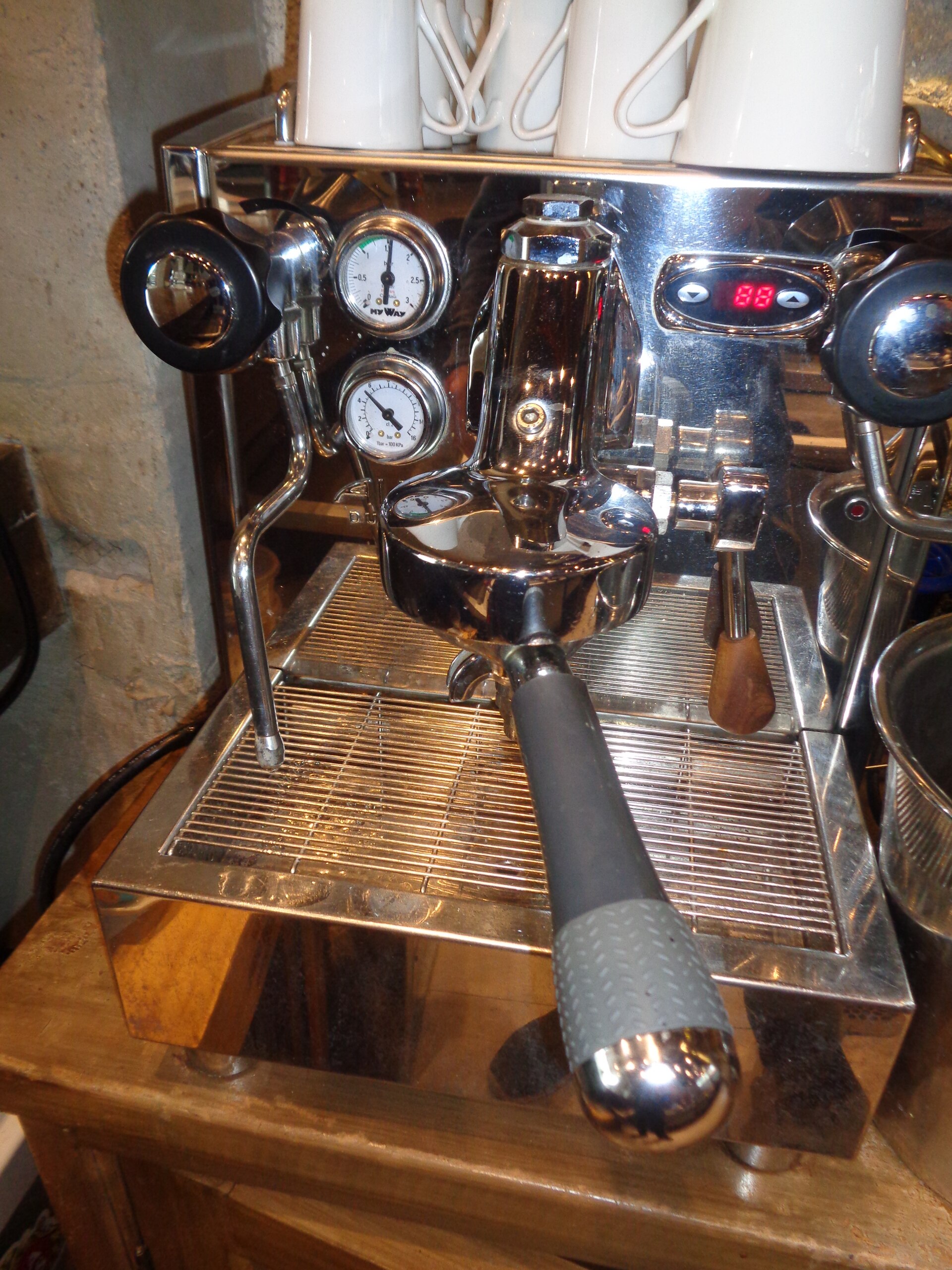
Choosing espresso equipment is harder than it should be. The market is full of overlapping options, conflicting opinions, and gear designed to look impressive on spec sheets without making your mornings meaningfully better.
This guide is built differently. Instead of ranking everything, we help you find what actually fits your situation: your budget, how often you brew, how much you want to learn, and what you're willing to trade off. Whether you're buying your first machine or filling in gaps in a setup you've already started, this is the page to start from.
This guide contains affiliate links. We earn a small commission on qualifying purchases at no extra cost to you.
How to Use This Guide
Start with the Quick Decision Tool below to find your buyer profile. Then jump to the section that fits and read the full breakdown from there. Each section links out to deeper guides and the product store when you're ready to buy.
Quick Decision Tool: What Type of Buyer Are You?
| Your situation | Go to |
|---|---|
| Complete beginner, under $700 total | Beginner Setup |
| Wants simplicity above all else | Convenience-First |
| Serious about the craft, $800–$1,500 budget | Enthusiast Setup |
| Already have a machine, need a grinder | Grinders by Budget |
| Just want accessories to improve existing setup | Accessories Worth Buying |
| Upgrading from a starter machine | Upgrade Path |
At-a-Glance Setup Comparison
| Buyer profile | Best fit | Budget range | Best for | Tradeoff |
|---|---|---|---|---|
| Beginner | Bambino Plus + Encore ESP | $700–$800 | Fast learning curve, reliable daily use | Less room for deep tinkering |
| Convenience-first | De'Longhi Magnifica Evo | ~$650 | Push-button espresso with minimal workflow | Less shot control |
| Enthusiast | Silvia + Mignon Silenzio | $1,200–$1,500 | Skill growth, longevity, upgrade-friendly workflow | More manual technique required |
| Existing setup upgrade | Grinder-first path | $90–$400 | Biggest quality jump per dollar | Doesn't solve machine limitations by itself |
Decision shortcuts
Winner picks by buying category
If you already know whether you need a machine, grinder, kit, or workflow upgrade, use these category winners to skip straight to the strongest next move.
Espresso machines Use this when the machine itself is the bottleneck and you need a clear recommendation instead of a spreadsheet war.
Best for most people
Breville Bambino Plus
Fast heat-up, forgiving workflow, and a small footprint make it the easiest daily-driver recommendation.
Watch for: Less appealing if you specifically want manual steaming practice or heavier prosumer hardware.
Budget pick
Breville Barista Express
The built-in grinder keeps total starter cost under control when you need one box to cover the basics.
Watch for: The grinder is convenient, but it is still the first part most people outgrow.
Upgrade pick
Rancilio Silvia
This is the right jump when you want stronger steam, long-term durability, and room to grow your technique.
Watch for: It rewards patience more than convenience, especially during the learning curve.
Best for beginners
De'Longhi Magnifica Evo
Choose it when push-button consistency matters more than learning manual shot workflow from scratch.
Watch for: You gain convenience, but you give up fine shot control.
Best pairing: Pair any machine pick with a grinder plan first — the Baratza Encore ESP is the default partner unless you are already shopping the upgrade tier.
Who should skip: Skip the expensive machine jump if your grinder still cannot make fine, repeatable espresso adjustments.
Espresso grinders When shots taste flat or inconsistent, the grinder usually matters more than moving up one machine tier.
Best for most people
Baratza Encore ESP
It is the cleanest grinder-first recommendation for beginners who want reliable espresso range without drama.
Watch for: Not the best fit if you want stepless adjustment or ultra-quiet grinding.
Budget pick
Timemore Chestnut C3
Best grind quality per dollar when hand-grinding for a minute is an acceptable tradeoff.
Watch for: Manual grinding gets old fast if you pull multiple drinks back to back.
Upgrade pick
Eureka Mignon Silenzio
Stepless adjustment and quieter operation make it the long-term grinder you can stop thinking about.
Watch for: Costs more up front and makes the most sense once you know espresso is sticking.
Best for beginners
Baratza Encore ESP
It keeps the learning curve sane while still being capable enough to avoid an immediate re-buy.
Watch for: Single-dose retention is only average if you swap beans constantly.
Best pairing: Pair the grinder with a scale and a simple dialing-in workflow so each adjustment teaches you something.
Who should skip: Skip the flashy machine upgrade if your current grinder still throws clumps or cannot stay in the espresso range.
Starter setups & kits These are for buyers who want a full path, not a pile of separate tabs and half-finished cart math.
Best for most people
Beginner Electric Setup
It is the cleanest all-around path for fast heat-up, a real espresso grinder, and a setup you will keep using.
Watch for: Costs more than the manual path, but removes more beginner friction.
Budget pick
Manual Budget Setup
Best value when you care more about cup quality than shaving every second off the workflow.
Watch for: Manual grinding is the tradeoff that keeps the budget sane.
Upgrade pick
Silvia + Mignon Silenzio path
This is the right move when you are deliberately building toward a longer-term enthusiast setup.
Watch for: It is overkill if you are still deciding whether home espresso will stick.
Best for beginners
Milk Drink Starter
If lattes and cappuccinos are the goal, this path solves the milk workflow early instead of bolting it on later.
Watch for: Less ideal if you mostly drink straight shots and want to keep the cart lean.
Best pairing: Start with a kit when you want the machine, grinder, and first-wave accessories to land together and make sense immediately.
Who should skip: Skip the bundle mindset if you already own a capable grinder or you are replacing just one weak link.
Scales If you are still eyeballing dose and yield, a scale is the fastest way to make your shots repeatable.
Best for most people
Acaia Pearl Coffee Scale
Fast response and reliable workflow make it the easiest scale to recommend once consistency becomes the priority.
Watch for: The price only makes sense if you brew often enough to care about the speed and polish.
Budget pick
Acaia Pearl Coffee Scale
It is the only scale in the current catalog, so the practical budget move is to buy it late rather than buying twice.
Watch for: If this price slows the whole setup down, put the money into the grinder first.
Upgrade pick
Acaia Pearl Coffee Scale
For daily home espresso, this is already the polished end-state upgrade instead of a stepping stone.
Watch for: It improves precision, not the underlying machine or grinder.
Best for beginners
Acaia Pearl Coffee Scale
It shortens the learning curve because you stop guessing dose and output from day one.
Watch for: Beginner-friendly does not mean beginner-cheap.
Best pairing: A scale matters most when paired with a grinder you can actually dial in and a simple target recipe.
Who should skip: Skip the premium scale spend if you are still missing a capable grinder or basic cleaning gear.
Tampers & distribution tools These are the small workflow upgrades that make puck prep more repeatable without pretending they matter more than the grinder.
Best for most people
Normcore 58.5mm Spring Tamper
It removes tamp pressure inconsistency, which is one of the easiest beginner variables to eliminate.
Watch for: Less urgent if your current tamper already fits well and your grinder is still the real bottleneck.
Budget pick
Generic WDT Needle Tool
Very cheap, immediate improvement in distribution, and one of the best low-cost anti-channeling upgrades.
Watch for: It helps most when your grinder is already capable enough to notice the difference.
Upgrade pick
Normcore 58.5mm Spring Tamper
If you only buy one polished puck-prep tool, make it the tamper you touch every single shot.
Watch for: It is refinement, not a substitute for better beans or a better grinder.
Best for beginners
Generic WDT Needle Tool
Cheap enough to try early and useful enough to show beginners what better puck prep feels like.
Watch for: Treat it as a helper, not a magic fix for weak grind quality.
Best pairing: Buy these after the grinder is handled; they amplify a solid workflow more than they rescue a weak one.
Who should skip: Skip boutique puck-prep toys until you can already pull a decent shot with the basics.
Milk pitchers & frothers Choose this path when milk drinks are the real goal and you want gear that supports texture and repeatability instead of just making foam.
Best for most people
Subminimal NanoFoamer Lithium
It is the most flexible milk-texture upgrade when you want better microfoam without changing machines.
Watch for: It still takes hand technique and a little patience to use well.
Budget pick
MHZY Stainless Steel Milk Frothing Pitcher 12oz
A good pitcher gives beginners more control over pour angle and milk texture without spending much.
Watch for: A pitcher helps the workflow, but it cannot create microfoam by itself.
Upgrade pick
Breville Milk Cafe
Best pick when convenience and repeatable milk drinks matter more than manual steaming as a hobby.
Watch for: It is less compelling if your espresso machine already has a steam wand you enjoy using.
Best for beginners
Breville Milk Cafe
Automatic froth control takes one more intimidating skill off the table while you learn espresso basics.
Watch for: You are buying ease, not café-style steam-wand technique.
Best pairing: Milk gear matters most when your machine or frother choice matches how often you actually make lattes and cappuccinos.
Who should skip: Skip the milk-focused spend if you mostly drink straight espresso and still need to fix your grinder or cleaning routine.
Cleaning & maintenance These are the cheapest products in the stack and some of the highest leverage for better-tasting espresso over time.
Best for most people
Urnex Full Circle Cleaning Kit
One kit handles the machine, steam wand, and accessory cleanup without making beginners assemble their own system.
Watch for: More expensive than buying a single cleaner first, but easier to stick with.
Budget pick
Pallo Coffee Tool Grouphead Brush
Cheap, useful every day, and the fastest way to keep the group head from becoming gross.
Watch for: It does not replace real detergent for deeper weekly cleaning.
Upgrade pick
Urnex Cafiza Espresso Machine Cleaner
Still the standard pick when you want cleaner shots and a maintenance routine that actually protects the machine.
Watch for: Only valuable if you use it consistently instead of letting it sit unopened.
Best for beginners
Urnex Full Circle Cleaning Kit
It is the easiest no-excuses way to start a maintenance habit before scale and old coffee oils pile up.
Watch for: Beginners still need to follow the routine — the kit does not do the cleaning for you.
Best pairing: Cleaning gear works best when it is bought with the machine instead of added after the first maintenance scare.
Who should skip: Skip the shiny accessory purchase before you have detergent and a brush covered.
Beginner Setup: Under $700
This is the most common situation: you want real espresso at home, you haven't bought anything yet, and you'd rather not make an expensive mistake. The setup below covers what actually matters for a first purchase.
What You Need (and What You Don't)
Every espresso setup needs two things: a machine and a grinder. Everything else is optional to start. A lot of beginners skip the grinder or use a blade grinder they already own — this is almost always the reason their espresso disappoints them.
The short version: buy a machine and a grinder together, and give both items proper budget.
Free planning worksheet If you are still comparing options, use this CTA slot for an email signup or downloadable checklist. For now, it sends readers to the contact page so the component is live without needing backend signup plumbing.Want the printable espresso setup checklist?
Machine: Breville Bambino Plus (~$500)
The Bambino Plus is the easiest first machine recommendation on this site. It heats up fast, it's compact, and it doesn't require mastering manual milk steaming on day one. The auto-frothing wand is a genuine help while you're still figuring everything else out.
Who it's for: People who want their mornings to work without a long learning curve.
Pros:
- 3-second heat-up
- Automatic milk steaming removes one variable while you learn
- Compact enough for most kitchens
- Consistent results without micromanagement
One thing to know: You'll want a dedicated grinder. The Bambino Plus does not include one, and your grind quality will determine most of your shot quality.
See current pricing in the espresso machine collection.
Grinder: Baratza Encore ESP (~$200)
The Encore ESP is the right grinder for almost every beginner setup. It grinds specifically for espresso range, it's reliable, and Baratza's repair support is the best in the consumer segment. It doesn't do anything unnecessary, which is what you want when you're still learning to dial in.
Who it's for: Anyone who wants a dependable electric grinder at a sensible price.
Pros:
- Purpose-built for espresso range
- Small footprint
- Baratza parts and support available for years
One thing to know: Single-dose grinding retention is average. If you switch beans frequently, expect a few grams of carryover.
See current pricing in the grinder collection.
Beginner Setup at a Glance
| Item | Recommended pick | Approx. price |
|---|---|---|
| Machine | Breville Bambino Plus | ~$500 |
| Grinder | Baratza Encore ESP | ~$200 |
| Cleaner (essential) | Urnex Cafiza | ~$20 |
| Total | ~$720 |
Shortcut if you're still deciding: read the dedicated best beginner espresso machine guide first, then come back here to finish the grinder and accessory stack.
You can trim cost by choosing the Timemore Chestnut C3 (~$90) instead of the Encore ESP if budget is tight — it's a manual grinder that punches above its price for espresso. Expect to spend 60–90 seconds cranking per dose. Details in the grinder guide.
Convenience-First: Super-Automatics
If pressing a button and getting a drink matters more to you than the craft of pulling espresso, a super-automatic machine is a legitimate choice — not a compromise. It suits busy households, office use, and people who genuinely don't want to learn manual technique.
De'Longhi Magnifica Evo (~$650)
The Magnifica Evo grinds, doses, tamps, and brews in one motion. You fill the bean hopper, press a button, and get espresso. There's no separate grinder to manage, no dose to weigh, and no milk technique to learn.
Who it's for: Buyers who want great coffee without the process.
Pros:
- True bean-to-cup convenience
- Adjustable strength and grind settings on the machine
- Minimal daily workflow
One thing to know: You give up fine-grained control over your shot. If you want to obsess over extraction variables, a semi-automatic setup is better.
See current pricing in the espresso machine collection.
Enthusiast Setup: $800–$1,500
At this budget, you're not just making espresso — you're learning it. The machines in this range are more capable and more demanding. They reward skill development and hold up better over years of daily use.
Machine: Rancilio Silvia (~$800)
The Rancilio Silvia has been a staple of serious home espresso for decades because it's fundamentally sound: commercial-weight construction, a 58mm portafilter, and steam power that teaches you milk technique rather than automating it. It is not the easiest machine on this list, but it is one of the most rewarding.
Who it's for: Motivated beginners and hobbyists willing to learn.
Pros:
- 58mm portafilter opens up a wide accessory ecosystem
- Built to last — many owners use them for 10+ years
- Teaches real espresso technique
- Lower maintenance cost over time than cheaper machines
One thing to know: The Silvia requires patience. Temperature management is manual and dial-in takes longer than on more forgiving machines.
See current pricing in the espresso machine collection.
Grinder: Eureka Mignon Silenzio (~$379)
The Mignon Silenzio is what most people upgrade to when they outgrow a starter grinder. Stepless micrometric adjustment, 50mm flat burrs, and extremely quiet operation. If you buy this as your first grinder, you won't need to upgrade it for a long time.
Who it's for: Enthusiasts who want to stop thinking about their grinder and focus on their shot.
Pros:
- Stepless adjustment enables precise dial-in
- Quietest home espresso grinder in the category
- Flat burrs produce a well-defined grind profile
See current pricing in the grinder collection.
Enthusiast Setup at a Glance
| Item | Recommended pick | Approx. price |
|---|---|---|
| Machine | Rancilio Silvia | ~$800 |
| Grinder | Eureka Mignon Silenzio | ~$379 |
| Scale | Acaia Pearl | ~$229 |
| Tamper | Normcore 58.5mm Spring Tamper | ~$59 |
| Total | ~$1,467 |
Grinders by Budget
The grinder is not the optional part. If you're working with a fixed budget and unsure how to split it between machine and grinder, lean toward the grinder. A good grinder paired with a modest machine outperforms the reverse.
| Budget | Best pick | Notes |
|---|---|---|
| Under $100 | Timemore Chestnut C3 (~$89) | Manual; best grind quality per dollar |
| $150–$250 | Baratza Encore ESP (~$200) | Best electric option at this range |
| $350–$450 | Eureka Mignon Silenzio (~$379) | Stepless; no need to upgrade again |
For a full breakdown with pros, cons, and what to avoid, read the grinder under $300 guide.
Browse current pricing in the grinder collection.
Accessories Worth Buying
If you already have a machine and grinder, accessories are where you can smooth out workflow and make your results more repeatable without buying a whole new setup.
| Priority | Accessory | Why it matters | Good starting budget |
|---|---|---|---|
| Must-have | Scale | Lets you measure dose and yield instead of guessing | $20–$229 |
| Must-have | Cleaner | Keeps taste clean and prevents long-term machine issues | $14–$30 |
| Nice early upgrade | Spring tamper | Improves repeatability if your stock tamper is weak | ~$59 |
| Nice early upgrade | WDT tool | Reduces clumps and channeling with very little cost | ~$20 |
| Later convenience buy | Knock box / milk tools | Improves workflow more than flavor | $20–$60 |
These are the accessories that actually improve your espresso in measurable ways — not gear for gear's sake.
Coffee Scale — Acaia Pearl (~$229)
Dialing in espresso without weighing your output is guesswork. A 0.1g precision scale with a built-in timer changes how fast you improve. The Acaia Pearl is the benchmark option: fast response, reliable Bluetooth, and a design that fits most drip trays cleanly.
For a tighter budget, any 0.1g precision kitchen scale works for weighing doses and output. The Acaia earns its price if you brew daily.
Spring Tamper — Normcore 58.5mm (~$59)
Inconsistent tamping pressure is a hidden source of channeling and uneven extraction. A calibrated spring tamper removes the variable by clicking at 30lbs every time. The Normcore 58.5mm fits the Breville 54mm portafilters with a reducer and fits 58mm portafilters (Rancilio, most commercial machines) directly.
WDT Tool — Generic (~$20)
A WDT (Weiss Distribution Technique) tool breaks up clumps in your puck before tamping, which reduces channeling. It's inexpensive and the improvement in shot consistency is usually immediate. Start here before buying more expensive accessories.
Cleaning Supplies
Clean machines make better espresso. The minimum kit:
- Urnex Cafiza (~$20): Weekly backflush detergent. The industry standard.
- Pallo Grouphead Brush (~$14): Daily brush after every shot.
If you want a complete starter set, the Urnex Full Circle Cleaning Kit (~$30) covers the group head, steam wand, and portafilter basket in one package.
Browse all accessories in the accessories collection.
Accessories to Skip at First
Not everything marketed to home baristas is worth buying early:
- Bottomless portafilter: Great for diagnosing channeling, but overwhelming while you're still learning. Buy it once you understand what you're looking for.
- PID temperature controller: Useful for the Rancilio Silvia, but a modification best made after you've learned the machine first.
- Knock box: Nice to have, not essential. Use any firm container to start.
- Milk pitcher with latte art markings: You don't need this until you're already making decent microfoam.
Upgrade Path
If you started with an entry-level machine and want to know what's worth changing:
Upgrade the grinder before the machine. This is almost always the right call. Moving from a basic burr grinder to the Baratza Encore ESP or Eureka Mignon Silenzio typically improves shot quality more than moving up one machine tier.
Add a scale before other accessories. Weighing your dose and yield is the fastest way to improve consistency and understand what you're adjusting.
Once the grinder is solid, consider the Rancilio Silvia if you want more control and longevity. The jump from a Bambino Plus or similar entry machine to the Silvia is the most meaningful machine upgrade in the sub-$1,000 range.
Key Features to Compare
When you're comparing machines side by side, these are the specs that actually matter:
| Feature | Why it matters |
|---|---|
| Boiler type | Single boiler = brew and steam alternate; heat exchanger/dual boiler = simultaneous. Matters more as you advance. |
| Portafilter size | 58mm is the commercial standard; more accessories, easier upgrades. 54mm (Breville) is fine for beginners. |
| Heat-up time | Shorter = more convenient for daily use. The Bambino Plus (3s) vs. Rancilio Silvia (~15 min) is a real difference. |
| Pressure profiling | Advanced feature; ignore until you've mastered standard technique. |
| Pump type | Vibration pumps are fine for home use. Rotary pumps are quieter but not meaningfully better for most home setups. |
Buying Checklist Before You Click Purchase
Run through this quick list before you order anything:
- Confirm the grinder plan. If the machine does not include a capable espresso grinder, budget for one separately.
- Check your counter reality. Measure width, depth, and cabinet clearance before choosing a machine with a big footprint or top-loading water tank.
- Match the workflow to your mornings. A great machine that feels annoying before work becomes a regret purchase fast.
- Plan for cleaning from day one. Add detergent and a brush to the cart now rather than treating maintenance like an optional extra.
- Avoid spec-sheet bait. More bars of pressure, more chrome, or more buttons does not automatically mean better home espresso.
Frequently Asked Questions
Do I really need a separate grinder?
Yes, for any machine without a built-in grinder. Grind quality is the single largest variable in espresso quality. A dedicated espresso grinder is not optional — it is part of the setup.
What if my budget only allows for one thing?
Split your budget at minimum 60/40 between machine and grinder. If you can only afford one, buy the grinder first and use an Aeropress or moka pot until you can add the machine. A bad grinder limits every machine it's paired with.
Should I buy used espresso equipment?
Machines: maybe. Grinders: yes, if the burrs are fresh or replacement cost is factored in. Avoid machines with no service history or signs of scale damage. Check the group head and portafilter gaskets before buying any used machine.
How long should a home espresso setup last?
A quality setup maintained properly should last 7–15 years for the machine and 5–10 years for the grinder burrs. This is why the value-per-year calculation often favors spending more upfront on durable equipment.
What's the biggest mistake beginners make?
Buying a machine and skipping the grinder — or using a blade grinder. The second biggest: not cleaning weekly with backflush detergent. Both are fixable. Neither should slow you down.
Where to Buy
All equipment referenced in this guide is available through the store, with Amazon affiliate links that help support the site:
For curated bundles by experience level, see the Starter Kits page.
Further Reading
- Best Espresso Machine for Beginners
- Best Espresso Grinder Under $300
- Why Grinder Quality Matters More Than Your Machine
- Best Espresso Accessories Under $100
- How to Dial In Espresso
- Espresso Machine Maintenance Guide
Recommended next step
Pick the setup path that matches your budget
If you are close to buying, move from theory into a kit, a machine comparison, or a product page that fits the workflow you actually want.
- Compare beginner-friendly machines Side-by-side before you commit.
- See the Bambino Plus The safest first-machine pick for most readers.
- See the Encore ESP The grinder upgrade that usually matters more than the machine jump.
As an Amazon Associate, Espresso Foundry earns from qualifying purchases. Product prices and availability are subject to change. Full affiliate disclosure.