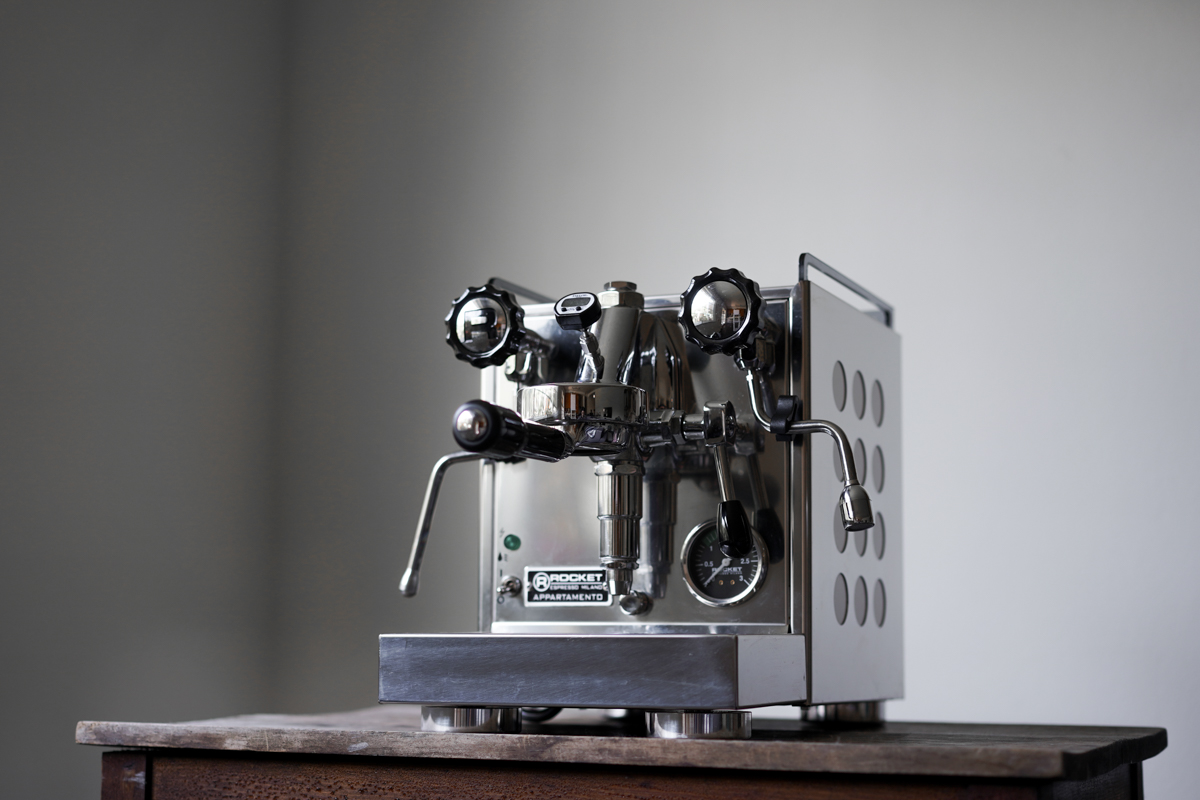
Your first espresso setup should make you want to use it on a Tuesday morning, not just admire it on YouTube.
That's the real filter. Most beginner buying mistakes happen because people shop for espresso gear like they're already deep into the hobby. They overbuy the machine, underbuy the grinder, and fill the cart with accessories that make the setup look serious without making the coffee easier or better.
This guide is the simpler version. If you're building your first espresso setup, here's how to do it without wasting money, cluttering your counter, or boxing yourself into gear you'll want to replace in three months.
This guide contains affiliate links. We earn a small commission on qualifying purchases at no extra cost to you.
The Short Version
If you want the cleanest path into home espresso, aim for this stack:
- Machine: Breville Bambino Plus
- Grinder: Baratza Encore ESP
- Must-have extras: cleaner, brush, and a basic scale
- Optional early upgrade: WDT tool if you want more consistency
That setup is strong because it stays focused on what actually changes results:
- A machine that heats up fast and isn't annoying to use
- A grinder that can actually dial in espresso
- A few low-cost tools that improve consistency and maintenance
If you want the wider market context first, read the complete espresso equipment buyer's guide. If you already know you're shopping beginner-first, keep going.
What Every First Espresso Setup Needs
A real setup has only two non-negotiables:
1. An espresso machine
This sounds obvious, but the right first machine is not the flashiest one. You want a machine that's forgiving, quick enough for daily use, and capable of producing solid espresso while you're still learning dose, grind, and timing.
2. An espresso-capable grinder
This is where most first setups go off the rails. Espresso is sensitive to grind size. A grinder that works “fine for coffee” is often not good enough for espresso. If your grinder can't make precise adjustments, your machine can't save you.
Everything else is secondary.
The Best First Espresso Setup for Most People
For most beginners, the safest recommendation is a semi-automatic machine plus a separate grinder.
Machine pick: Breville Bambino Plus
The Breville Bambino Plus is one of the best first-machine choices because it solves the biggest beginner friction points:
- very fast heat-up time
- compact counter footprint
- simple controls
- automatic milk steaming if you want milk drinks without mastering a steam wand immediately
It doesn't try to turn you into a technician on day one. That's a good thing.
Grinder pick: Baratza Encore ESP
Pair it with the Baratza Encore ESP. This is the part that keeps the setup honest. The grinder is espresso-capable, repair-friendly, and much more likely to help you get repeatable shots than a random budget burr grinder.
If you're buying only one thing with long-term impact, make sure it isn't the grinder you compromise on.
Why this combo works
This setup hits the sweet spot between beginner-friendly and worth keeping:
| Part | Pick | Why it works |
|---|---|---|
| Machine | Breville Bambino Plus | Fast, approachable, compact, forgiving |
| Grinder | Baratza Encore ESP | Espresso-capable, dependable, easy to recommend |
| Cleaner | Urnex Cafiza | Keeps flavor clean and prevents neglect |
| Brush | Pallo Grouphead Brush | Makes daily cleanup easier |
If you mostly drink lattes and cappuccinos, this is a very easy setup to live with. If you mostly drink straight espresso, it's still strong because the grinder budget is protected.
First Espresso Setup by Budget
Under $300: Not ideal, but still workable with compromises
If your total budget is very tight, the smartest move is usually not to force a full electric espresso setup immediately.
A manual grinder like the Timemore Chestnut C3 can keep you moving while you learn bean freshness, dose, and grind basics. It takes more effort, but it preserves grind quality better than buying a weak electric grinder just to save time.
This range is best for people who are okay building in stages.
Best mindset here: buy slower, not worse.
Around $700 to $900: Best value for a real beginner setup
This is the strongest first-setup range for most people.
A practical stack looks like this:
| Item | Approx. price |
|---|---|
| Breville Bambino Plus | $499.95 |
| Baratza Encore ESP | $199.95 |
| Urnex Cafiza | $19.99 |
| Pallo Grouphead Brush | $14.00 |
| Generic WDT tool or basic scale | ~$20 |
| Estimated total | ~$754 to $775 |
At this level, you're no longer buying "starter" gear in the bad sense. You're buying equipment that can actually teach you espresso.
Around $1,200 to $1,500: For people who already know they want the hobby
If you're certain you want to go deeper, a setup centered on the Rancilio Silvia and Eureka Mignon Silenzio makes sense.
This is a stronger setup, but it is not automatically a better first setup for everybody.
Choose this path if:
- you want to learn technique seriously
- you don't mind a steeper learning curve
- you would rather buy once than upgrade later
Skip it if what you actually want is fast, low-friction coffee before work.
Built-In Grinder vs Separate Grinder
A lot of first-time buyers ask whether they should just get a machine with a built-in grinder.
The honest answer: sometimes, yes.
The Breville Barista Express is a reasonable all-in-one pick for people who want fewer separate pieces on the counter and a simpler shopping decision.
When an all-in-one makes sense
Choose an all-in-one if:
- you want less setup clutter
- you know convenience matters more than upgrade flexibility
- you like the idea of learning one integrated workflow
When separate gear is smarter
Choose a separate grinder if:
- you want easier upgrades later
- you care more about grind quality than simplicity
- you want to replace one weak link without replacing the whole setup
For most people, separate grinder setups are still the cleaner long-term move. But the Barista Express is a fair shortcut if you value simplicity and want one-box momentum.
What Accessories Matter for a First Espresso Setup?
This is where beginner carts get bloated fast.
Buy these early
1. Cleaner
Use Urnex Cafiza or a similar detergent. Weekly cleaning matters more than most people expect. Dirty machines taste worse and age faster.
2. Grouphead brush
A Pallo Grouphead Brush is cheap, useful, and one of those tools you'll actually touch every day.
3. Scale
A simple 0.1g scale helps you stop guessing. You don't need a premium scale on day one, but you do need some way to track dose and output if you want consistent espresso.
4. Milk pitcher, if you drink milk drinks
A basic pitcher like the MHZY stainless frothing pitcher is enough to start.
Nice to have, not urgent
These can absolutely improve workflow or consistency, but they are not the foundation.
Skip these at the beginning
- expensive distribution tools before you own a good grinder
- aesthetic storage gear before you own a scale
- upgrade tampers before you understand your current workflow
- niche accessories because social media made them look mandatory
A Smart Shopping Order
If you want a dead-simple buying sequence, use this:
- Machine
- Grinder
- Cleaner + brush
- Scale
- Milk tools or WDT tool
- Everything else later
That order works because it protects the parts that affect taste and repeatability first.
Three Beginner Paths That Actually Make Sense
Path 1: Convenience-first beginner
Best if you want espresso at home without turning it into a project.
- Breville Bambino Plus
- Baratza Encore ESP
- basic cleaner + brush
Path 2: One-box simplicity
Best if you want to buy one machine and start quickly.
- Breville Barista Express
- cleaner + brush
- add scale next
Path 3: Hobby-first beginner
Best if you already know you want to learn the craft properly.
- Rancilio Silvia
- Eureka Mignon Silenzio
- scale
- tamper
- cleaning supplies
If you're still deciding between those three, think less about aspiration and more about how you actually behave at 7 a.m.
Mistakes to Avoid in Your First Espresso Setup
Buying the machine you wish you were ready for
A harder machine isn't always a better machine. If it slows you down or frustrates you, it's the wrong first move.
Treating the grinder like an accessory
The grinder is part of the core setup. It's not the optional side quest.
Spending too much on accessories too early
A beautiful tamping station doesn't fix inconsistent grind size.
Ignoring cleaning from the start
A setup that tastes good in week one can taste stale and sloppy by month two if maintenance never becomes routine.
So What Should You Actually Buy?
If you want the shortest honest answer:
Most people should start with the Breville Bambino Plus + Baratza Encore ESP + basic cleaning gear.
That's the first espresso setup that covers the fundamentals without making the process heavier than it needs to be.
From there:
- add a scale if you don't already have one
- add a milk pitcher if you make milk drinks
- add a WDT tool if you want to improve shot consistency
- upgrade later only after you know what annoys you about your current setup
That last part matters. The best upgrades are reactions to real workflow pain, not guesses.
If you're ready to shop, browse the espresso machine collection, grinder collection, and accessories section. You can also compare setup logic against the best beginner espresso machine guide and the espresso equipment buyer's guide.
If you are buying today
Skip the random shopping cart and build a coherent first setup
Use a starter kit if you want the fastest path, then sanity-check machine and grinder fit before you send anything to Amazon.
- Read the full buyer's guide Use this if you still need the bigger decision tree.
- See the Bambino Plus Compact, fast, and easy to live with as a first machine.
- Add the Encore ESP The grinder that makes the beginner setup actually work.
As an Amazon Associate, Espresso Foundry earns from qualifying purchases. Product prices and availability are subject to change. Full affiliate disclosure.